
Health and fitness
How to Deal with Construction Site Noise: Practical Tips for Peaceful Living


Introduction
Construction sites are a sign of growth and development, but the noise that comes with them can be a major headache. From the early morning hum of machinery to the late-afternoon drilling, construction noise can disrupt daily life, work, and sleep. Whether you live near a construction zone or work in an office nearby, knowing how to deal with construction site noise is crucial. In this article, we’ll break down practical strategies to handle this common problem without losing your sanity.
Understanding Construction Noise and Its Impact
Construction noise comes from various sources—jackhammers, bulldozers, trucks, and power tools. Each of these contributes to high-decibel sounds that can penetrate walls, windows, and even earplugs.
Why it matters: Constant exposure to loud noise isn’t just annoying; it can affect mental health, increase stress levels, and disrupt sleep. Studies have shown that noise pollution can even impact heart health and overall well-being. Understanding the source and level of noise helps you plan effective strategies to cope with it.
Noise also varies depending on the type of construction. Residential construction might involve occasional hammering or drilling, while large-scale projects like roadworks can produce continuous, loud sounds. Knowing this allows you to anticipate peak noise periods and adjust your schedule accordingly.
1. Soundproof Your Home
One of the most effective ways to combat construction noise is by making your home a quieter space. Start by identifying weak points where sound enters: windows, doors, walls, and floors.
Windows and doors: Invest in double-glazed windows, which are excellent at blocking noise. For doors, weather stripping or door sweeps can seal gaps that let sound in. Heavy curtains or acoustic panels can further dampen noise.
Walls and floors: Adding thick rugs, carpets, or wall hangings can reduce echo and absorb sound. For long-term solutions, consider acoustic wall panels or insulation, which dramatically reduce the intensity of external noise. While these solutions may require some investment, they are worthwhile for long-term peace of mind.
2. Use Personal Noise-Reduction Tools
Sometimes, you can’t control the noise outside, so the next best solution is protecting your personal space. Earplugs and noise-canceling headphones are highly effective, especially for work or sleep.
Earplugs: Soft foam earplugs are inexpensive and can reduce noise by up to 30 decibels. They are ideal for daytime naps or focused work sessions.
Noise-canceling headphones: These are perfect if you need concentration at home or while working remotely. Pair them with calming music or white noise to mask construction sounds.
White noise machines: These devices emit consistent sounds like rainfall, ocean waves, or fan noise. They are particularly helpful for people who have trouble sleeping when there’s construction nearby.
3. Plan Your Day Around Construction Hours
Knowing when construction happens can make a huge difference. Most construction projects follow a set schedule, usually starting early in the morning and stopping in the late afternoon.
Early morning or late-night planning: Avoid tasks that require deep focus during peak construction hours. If possible, schedule work, study, or calls outside these noisy periods.
Communication with workers or management: In some cases, reaching out to the construction company or local authorities can help you understand their schedule and even request minor adjustments, like pausing noisy work during critical times.
4. Create a Quiet Indoor Environment
Beyond soundproofing and noise-canceling tools, you can actively design your indoor environment to reduce stress caused by construction noise.
Soft furnishings: Cushions, carpets, and fabric wall hangings absorb sound and reduce echo.
Indoor plants: Surprisingly, plants can help dampen noise while improving air quality. Large leafy plants like rubber plants or ferns are ideal.
White noise or ambient sounds: Play calming sounds, instrumental music, or gentle nature tracks to mask construction noise. This is especially effective if you’re working from home or trying to relax.
5. Legal and Community Approaches
If construction noise becomes unbearable, there are legal and community-based options to consider.
Local regulations: Many cities have noise ordinances limiting construction hours. Check with your local council to see if the construction site is following legal guidelines.
File a complaint: If noise exceeds permitted limits, you can file a complaint with local authorities or environmental protection agencies. Keep a log of noise times and intensity—it strengthens your case.
Community engagement: Joining a neighborhood association or online community forum can help coordinate collective action. Often, a polite group request to a construction company can lead to adjustments, like pausing loud work during early mornings or weekends.
6. Maintain Mental Well-Being
Constant construction noise can increase stress, anxiety, and frustration. Taking care of your mental well-being is just as important as physical soundproofing.
Mindfulness and relaxation: Techniques like meditation, deep breathing, or yoga can help you stay calm when noise levels spike.
Exercise: Regular physical activity is a natural stress reliever and can help you cope with temporary discomfort.
Breaks outside the home: Spending time in quieter areas—parks, libraries, or cafés—can give your mind a much-needed rest from the noise.
7. Consider Long-Term Relocation or Adjustments
If the construction noise is ongoing and unavoidable, long-term solutions might be necessary.
Relocation: Moving to a quieter neighborhood is an extreme step but sometimes necessary for mental health, especially for families with children or individuals working from home.
Adjusting your home setup: In some cases, relocating bedrooms or home offices to quieter parts of the house can significantly reduce daily exposure to noise.
Investing in permanent soundproofing: For long-term comfort, professional installation of acoustic panels, double-glazing, or heavy insulation can be a game-changer.
Conclusion
Dealing with construction site noise can be frustrating, but with the right strategies, it’s manageable. From soundproofing your home and using personal noise-reduction tools to planning your day around noisy hours and taking legal or community action, you have multiple ways to regain peace.
Remember, protecting your mental and physical health should always be a priority. By combining practical measures and stress-relief techniques, you can minimize disruption and continue living or working comfortably, even with construction going on nearby.
Construction may be temporary, but your peace of mind doesn’t have to be.

Introduction
Health issues are becoming more common in today’s fast-paced world, and many people search online to understand diseases better. One such term that is gaining attention is septosis. If you have heard this word but are not sure what it means, you are not alone. Many people confuse it with other conditions, making it important to understand it clearly.
In this guide, we will explain septosis in the simplest way possible. You will learn about its causes, symptoms, treatments, and how to prevent it. This article is designed to give you clear, helpful information so you can protect yourself and your loved ones.
What is Septosis?
Septosis is a serious medical condition that happens when the body reacts badly to an infection. It can affect different parts of the body and may become life-threatening if not treated on time.
In simple words, when an infection spreads and the body’s immune system overreacts, it can lead to septosis. This reaction can damage tissues, organs, and even stop them from working properly.
Key Points:
- It is caused by infections (bacterial, viral, or fungal)
- It can spread quickly in the body
- Early treatment is very important
Causes of Septosis
Understanding the causes can help in early detection and prevention.
1. Bacterial Infections
The most common cause of septosis is bacteria entering the bloodstream. This can happen through wounds, cuts, or infections like pneumonia.
2. Viral Infections
Some viruses can also trigger septosis, especially in people with weak immune systems.
3. Fungal Infections
Though less common, fungal infections can also lead to this condition, especially in hospitals.
4. Untreated Infections
If an infection is ignored or not treated properly, it can spread and turn into a serious condition.
Symptoms of Septosis
Recognizing symptoms early can save lives. Here are some common signs:
Early Symptoms
- Fever or very low body temperature
- Fast heartbeat
- Rapid breathing
- Weakness or fatigue
Advanced Symptoms
- Confusion or difficulty thinking
- Low blood pressure
- Severe pain in the body
- Reduced urine output
If you notice these symptoms, it is important to seek medical help immediately.
How Septosis Affects the Body
When septosis develops, the body’s response to infection becomes harmful instead of helpful.
Impact on Organs
- Lungs: Difficulty in breathing
- Kidneys: Reduced urine production
- Heart: Low blood pressure
- Brain: Confusion or unconsciousness
Why It’s Dangerous
The biggest risk is organ failure. Without treatment, this condition can become fatal within a short time.
Risk Factors of Septosis
Some people are more likely to develop this condition.
High-Risk Groups
- Elderly people
- Infants and young children
- People with weak immune systems
- Patients with chronic diseases
Lifestyle Risks
- Poor hygiene
- Untreated wounds
- Lack of proper medical care
Being aware of these risks can help you stay safe.
Diagnosis of Septosis
Doctors use different methods to diagnose this condition.
Common Tests
- Blood tests
- Urine tests
- Imaging (X-rays or CT scans)
Why Early Diagnosis Matters
Early diagnosis increases the chances of recovery and reduces complications.
Treatment of Septosis
Treatment should begin immediately once diagnosed.
1. Antibiotics
Doctors usually start antibiotics right away to fight infection.
2. IV Fluids
Fluids are given to maintain blood pressure and hydration.
3. Oxygen Therapy
Helps patients who have breathing problems.
4. Intensive Care
In severe cases, patients may need ICU care and monitoring.
Recovery Time
Recovery depends on how early the condition is treated and the patient’s overall health.
Prevention Tips
Prevention is always better than cure. Here are simple ways to reduce risk:
Personal Hygiene
- Wash hands regularly
- Keep wounds clean and covered
Vaccination
Vaccines can prevent infections that may lead to serious conditions.
Early Treatment
Never ignore infections. Treat them as soon as possible.
Healthy Lifestyle
- Eat a balanced diet
- Exercise regularly
- Get enough sleep
Septosis vs Similar Conditions
Many people confuse septosis with other diseases.
Septosis vs Infection
- Infection is the cause
- Septosis is the body’s extreme reaction
Septosis vs Severe Infection
Not all infections lead to this condition, but untreated ones can.
Complications of Septosis
If not treated, this condition can cause serious problems:
- Organ failure
- Tissue damage
- Long-term health issues
- Death in severe cases
This is why early action is critical.
When to See a Doctor
You should seek medical help immediately if you notice:
- High fever with chills
- Difficulty breathing
- Confusion or dizziness
- Severe pain
Delaying treatment can be dangerous.
FAQs About Septosis
1. Is septosis life-threatening?
Yes, it can be very serious if not treated quickly.
2. Can septosis be cured?
Yes, with early treatment, many people recover fully.
3. Who is most at risk?
Elderly, infants, and people with weak immune systems.
4. How fast does it spread?
It can spread very quickly, sometimes within hours.
5. Can it be prevented?
Yes, with proper hygiene, early treatment, and healthy habits.
Conclusion
Understanding septosis is very important for protecting your health. It is a serious condition, but with early detection and proper treatment, it can be managed effectively. Knowing the symptoms and causes helps you take action quickly when needed.
Always pay attention to your body and never ignore signs of infection. Simple habits like hygiene and timely medical care can make a big difference. Stay aware, stay safe, and take control of your health today.
Your health is your greatest wealth—never take it for granted.

Introduction
Cooking is not just about taste—it’s also about technique. Some recipes require high flames and quick cooking, while others demand patience and gentle heat. That’s where the Bain Marie comes in. Known as a water bath or double boiler, this simple yet powerful tool has been used by chefs, bakers, and caterers for centuries. It allows food to be heated gently and evenly, without burning or separating.
From melting chocolate to preparing delicate sauces or keeping food warm at a buffet, the Bain Marie is an essential tool in both professional kitchens and home cooking. In this article, we’ll explore everything you need to know about the Bain Marie—its history, uses, types, benefits, safety tips, and how it can improve your cooking game. By the end, you’ll understand why it’s called the chef’s secret weapon for perfect results.
What is a Bain Marie?
A Bain Marie is a cooking method where a container of food is placed inside another container filled with hot water. The water surrounds the food container and gently heats it. This indirect heating method prevents food from burning, curdling, or overcooking.
The term comes from French and literally means “Mary’s Bath.” Historians believe it was named after an ancient alchemist, Maria the Jewess, who used a similar technique for heating substances slowly and evenly.
How Does a Bain Marie Work?
The science behind a Bain Marie is simple:
- Water heats up to 100°C (212°F) and doesn’t go higher under normal conditions.
- This prevents food from being exposed to extremely high direct heat.
- As a result, delicate dishes like custards, sauces, and chocolate are cooked evenly and safely.
Common Uses of a Bain Marie
1. Melting Chocolate 🍫
Chocolate burns easily on direct heat. A Bain Marie ensures smooth, glossy, lump-free melted chocolate.
2. Making Sauces 🥘
Delicate sauces like hollandaise, cheese sauce, or béarnaise require gentle heating to avoid curdling.
3. Custards & Desserts 🍮
Desserts like crème brûlée, cheesecakes, and puddings are baked in a water bath to prevent cracks and dryness.
4. Keeping Food Warm in Catering 🍲
Restaurants and buffets use electric Bain Maries to keep food at safe serving temperatures without drying it out.
5. Scientific and Medical Use 🧪
Outside kitchens, Bain Maries are also used in laboratories for controlled heating of liquids and samples.
Types of Bain Maries
1. Stovetop Bain Marie (Double Boiler)
- A bowl or pan placed over a pot of simmering water.
- Common in home kitchens for baking and melting.
2. Oven Bain Marie (Water Bath Baking)
- Baking dish placed inside a tray filled with hot water.
- Used for cheesecakes, custards, and puddings.
3. Electric Bain Marie
- Common in restaurants and buffets.
- Stainless steel trays keep soups, curries, pasta, or rice warm.
4. Laboratory Bain Marie
- Specialized heated water containers used for scientific experiments.
Features of a Bain Marie
When choosing or using a Bain Marie, consider these features:
- Material: Stainless steel, ceramic, or glass.
- Heating Source: Stovetop, oven, or electric.
- Temperature Control: Some models offer adjustable settings.
- Size: From small home versions to large catering units.
- Lids & Covers: Helps retain moisture and heat.
Benefits of Using a Bain Marie
✅ Gentle and Even Cooking
Prevents food from overheating, burning, or sticking.
✅ Perfect for Delicate Dishes
Chocolate, sauces, and custards come out smooth and flawless.
✅ Keeps Food Warm for Hours
Ideal for restaurants, buffets, and events.
✅ Multi-Purpose
Useful in both kitchens and labs.
Pros and Cons of a Bain Marie
Pros
- Easy to use
- Prevents burning
- Maintains food quality
- Essential for baking delicate desserts
Cons
- Slower cooking method
- Requires extra utensils
- Electric versions can be expensive
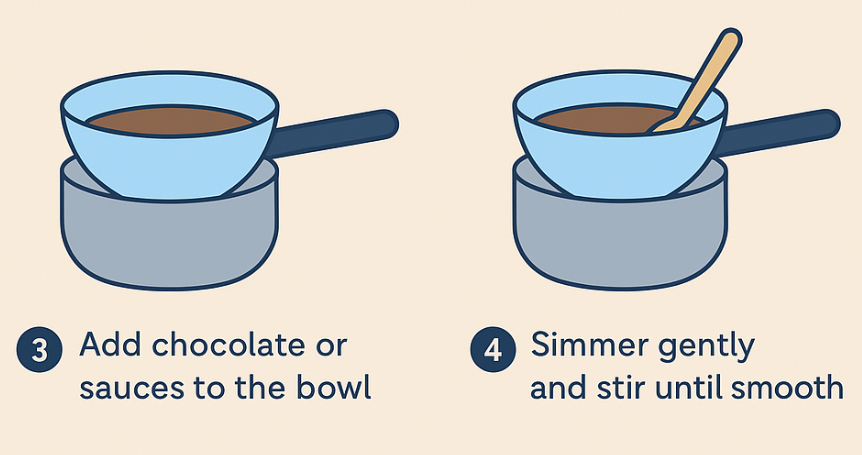
How to Use a Bain Marie (Step by Step)
For Melting Chocolate or Sauces
- Fill a saucepan halfway with water.
- Place a heatproof bowl on top, ensuring it doesn’t touch the water.
- Add chocolate or sauce to the bowl.
- Simmer gently and stir until smooth.
For Baking Custards or Cheesecake
- Place your baking dish in a larger roasting pan.
- Pour hot water into the pan until it reaches halfway up the sides of the dish.
- Bake slowly for even cooking.
For Catering (Electric Bain Marie)
- Fill the bottom tray with hot water.
- Place food trays above.
- Switch on heating for continuous warmth.
Safety Tips for Using a Bain Marie
- Don’t overfill with water—it may spill into the food.
- Use oven mitts when handling hot containers.
- Keep electric Bain Maries dry to avoid hazards.
- Stir occasionally to prevent lumps in sauces or chocolate.
Bain Marie in Professional Kitchens
In professional kitchens, Bain Maries are used daily. Chefs rely on them to:
- Melt butter and chocolate
- Prepare custards in bulk
- Keep gravies, soups, and curries hot for service
- Hold side dishes like rice and pasta at perfect serving temperature
They’re an essential part of any catering setup.
Bain Marie vs Double Boiler: What’s the Difference?
Many people confuse them.
- Bain Marie: General method using hot water, can be stovetop, oven, or electric.
- Double Boiler: Specifically two pots stacked (one with water, one with food).
So, a double boiler is a type of Bain Marie.
Buying Guide: Choosing the Best Bain Marie
When buying one, look for:
- Purpose: Home (baking, melting) or commercial (buffet, catering).
- Size: Small bowls vs large food trays.
- Material: Stainless steel for catering, ceramic/glass for baking.
- Budget: Manual Bain Maries are cheaper; electric ones cost more.
FAQs About Bain Marie
Q1. What is the main purpose of a Bain Marie?
To provide gentle and even heating for delicate foods without burning.
Q2. Is Bain Marie the same as a double boiler?
Yes, but a double boiler is a type of Bain Marie used on stovetops.
Q3. Can I bake cheesecake without a Bain Marie?
Yes, but it may crack. A water bath ensures smooth, creamy texture.
Q4. What temperature should a Bain Marie be kept at?
Around 60–70°C (140–158°F) to keep food warm without overcooking.
Q5. Is Bain Marie only for professional chefs?
No, it’s also useful for home bakers, caterers, and even laboratories.
Conclusion
A Bain Marie may look like a simple cooking method, but it’s a powerful tool in both home kitchens and professional catering. From melting chocolate and preparing sauces to baking cheesecakes and keeping food warm, it ensures gentle, even heating that protects food from burning or drying out.
If you’re a food lover, baker, or chef, investing in a Bain Marie can completely change your cooking game. It not only improves food quality but also saves time and stress. Whether you’re working at home or running a restaurant, the Bain Marie is truly a must-have secret tool for perfect cooking results.

Roleksi: The Ultimate Guide to Luxury Style, Craftsmanship, and Smart Buying in 2026

Museumsaufsicht Job: Salary, Duties, Requirements & How to Get Hired

Septosis: Causes, Symptoms, Treatment & Prevention

Darkzadie Ren Telegram: The Ultimate Guide to the Viral Channel Everyone’s Talking About

Banflix: The Ultimate Guide to Features, Streaming Experience, and Safety (2026)

Simpcity.su: Complete Guide to Features, Safety, and User Experience (2026)

 General5 months ago
Darkzadie Ren Telegram: The Ultimate Guide to the Viral Channel Everyone’s Talking About

 Entertainment6 months ago
Banflix: The Ultimate Guide to Features, Streaming Experience, and Safety (2026)

 General8 months ago
Simpcity.su: Complete Guide to Features, Safety, and User Experience (2026)

 Finance9 months ago
GoMyFinance.com Saving Money: Smart Strategies to Build Wealth Faster (2026 Guide)
 Education & Learning8 months ago
FamilyZilla.com: The Ultimate Guide to Features, Benefits, and Safe Family Management (2026)

 Tech3 months ago
Hentairead: A Complete Expert Guide to What It Is, How It Works, and What to Know

 Entertainment9 months ago
AnimeKai: The Ultimate Home for Anime Lovers in 2025

 General8 months ago
Samsara Island: Your Ultimate Tropical Paradise Adventure