
Education & Learning
Search Google or Type a URL – What It Really Means and How to Use It Smartly


Introduction
If you’ve ever opened a web browser like Chrome, Firefox, or Edge, you’ve probably noticed the phrase “Search Google or type a URL” written in the address bar. It’s a simple message, but many people still wonder what it really means or why it appears there.
In this article, we’ll explain everything about search Google or type a URL — what it is, why it shows up, how it works, and how you can use it effectively. Whether you’re new to using browsers or just curious, this guide will make the concept clear and easy to understand.
What Is Search Google or Type a URL?
The phrase “Search Google or type a URL” appears in the address bar (also called the “omnibox”) of web browsers, especially Google Chrome. It simply tells users that they can either search the web using Google or enter a specific website address (URL) directly.
For example:
- If you type weather today and press Enter, Google will show you search results.
- If you type Blogzina.co.uk it will take you directly to YouTube’s website.
So, the message serves as a helpful guide, reminding users that the same bar can be used for both searching and browsing.
Features of Search Google or Type a URL
Here are some key features that make this simple function incredibly useful:
- Dual-purpose design: You can search for anything or visit a specific site from the same place.
- Smart suggestions: The browser shows auto-complete results and suggestions as you type.
- Voice input: Some browsers allow you to speak your search instead of typing.
- Instant search: Results appear as you type, making the process faster.
- Integrated bookmarks: It remembers and suggests sites you visit often.
- Auto-correct and history: It helps fix typing errors and shows previous searches.
These features make search Google or type a URL an essential tool for everyday web use.
Benefits of Search Google or Type a URL
There are several reasons why this feature is so useful:
- Saves time: You don’t need to open a separate search page — just type in the bar.
- Simplifies browsing: You can search and visit sites all from one place.
- Improves accuracy: Auto-suggestions help you find exactly what you need faster.
- Reduces confusion: New users understand instantly how to search or enter websites.
- Personalized experience: Google tailors suggestions based on your previous activity.
The feature acts as a digital assistant, making your browsing experience smooth and efficient.
How Search Google or Type a URL Works
Let’s break down how this function actually works:
- When you type a word or phrase:
The browser identifies that it’s not a web address and sends your query to Google’s search engine. - When you type a URL:
If the input includes “www” or ends with “.com,” “.net,” or another domain, the browser recognizes it as a direct address and opens that site. - Behind the scenes:
The browser uses algorithms to determine whether to treat your input as a search query or URL. - Search suggestions:
As you type, Google’s predictive algorithms display possible searches or websites you might want to visit.
In short, search Google or type a URL combines the power of search engines with the simplicity of direct navigation — all in one place.
Pros & Cons of Search Google or Type a URL
Pros
- Extremely easy to use for beginners and experts alike.
- Combines search and navigation in a single tool.
- Offers fast, intelligent suggestions while typing.
- Enhances user experience through predictive search.
- Works across all devices, including phones, tablets, and PCs.
Cons
- Requires internet to function fully.
- May track browsing habits for personalized results.
- Can show irrelevant suggestions occasionally.
- Some users may find it distracting if they prefer manual navigation.
Even with minor drawbacks, the benefits clearly outweigh the negatives, making this feature a favorite for millions of users worldwide.
Safety and Privacy
When using search Google or type a URL, it’s important to understand how your data is handled:
- Encrypted connection: Most modern browsers use HTTPS for safe communication.
- Private mode: You can use “Incognito Mode” to avoid storing search history.
- Data protection: Google uses your data to personalize results, but you can adjust privacy settings anytime.
- Avoid suspicious URLs: Always double-check the address before entering login details to prevent phishing scams.
To stay safe, always keep your browser updated and avoid clicking unknown links from unverified sources.
Alternatives to Search Google or Type a URL
If you don’t want to use Google or prefer other search engines, here are some alternatives:
- Bing: Microsoft’s search engine with image and video-rich results.
- DuckDuckGo: Focuses on privacy and doesn’t track user activity.
- Yahoo Search: Still popular for basic searches and integrated news.
- Brave Search: Privacy-focused and integrated with the Brave browser.
- Ecosia: A search engine that plants trees with its ad revenue.
Each of these offers similar functionality to search Google or type a URL, but with different priorities such as privacy, design, or eco-friendliness.
Tips for Using Search Google or Type a URL
Here are a few practical tips to make the most out of this feature:
- Use keywords: Type short, specific words for better search results.
- Bookmark frequently visited sites for quicker access.
- Clear cache regularly to keep your browser running smoothly.
- Use incognito mode for private browsing.
- Update your browser to access the latest security and speed improvements.
- Try voice search if your browser supports it — it’s fast and hands-free.
These small steps can make your daily browsing experience faster, safer, and more enjoyable.
FAQs About Search Google or Type a URL
Q1: Why does it say “Search Google or type a URL” in my browser?
A1: It’s a default message in your browser’s address bar that tells you that you can either search using Google or directly enter a website address.
Q2: Can I change the default search engine from Google?
A2: Yes. You can go to your browser settings and select another search engine like Bing, Yahoo, or DuckDuckGo.
Q3: What happens if I type a wrong URL?
A3: If the URL doesn’t exist, you’ll get an error message like “Site can’t be reached.” The browser may also redirect you to a Google search page.
Q4: Is it safe to use “Search Google or type a URL”?
A4: Yes, it’s completely safe when used through trusted browsers. Always use secure websites (HTTPS) for sensitive information.
Q5: Why does the phrase appear only in some browsers?
A5: The wording is specific to Google Chrome and a few browsers that use Google as the default search engine. Other browsers may display similar phrases.
Conclusion
The message “Search Google or type a URL” might look simple, but it represents one of the most convenient tools in modern web browsing. It merges searching and website navigation into one easy step, saving users time and effort every day.
Whether you’re exploring new information, shopping online, or checking your favorite websites, search Google or type a URL helps you do it all from one place. It’s fast, efficient, and designed to simplify your digital life.
So next time you open your browser and see search Google or type a URL, you’ll know exactly what it means — and how to use it like a pro. Start typing, explore the web, and let the world of information come to you!
ChatGPT can m

Introduction
When news broke about the easyJet U22152 emergency Germany incident, many travelers immediately asked the same questions: What happened? Was everyone safe? And how do airlines handle emergencies like this?
Aviation incidents can sound alarming, especially when the word “emergency” is involved. However, not every emergency means danger in the dramatic sense. In aviation, an emergency often refers to a precautionary situation where the crew chooses safety over convenience.
In this article, we’ll walk through the easyJet U22152 emergency Germany event in clear, simple terms. We’ll explore what an aviation emergency really means, how airline crews are trained to respond, and what passengers can learn from this situation.
What Is the easyJet U22152 Emergency Germany Incident?
The easyJet U22152 emergency Germany refers to a situation where an easyJet flight operating under the flight number U22152 declared an emergency while in German airspace or during a diversion to a German airport.
While airlines and authorities often release limited technical details, the core facts usually include:
- The flight crew identified an unexpected onboard or technical issue
- Standard emergency procedures were followed
- Air traffic control in Germany provided priority handling
- The aircraft landed safely as a precaution
It’s important to note that in modern aviation, declaring an emergency is a preventive action, not a sign of failure.
Understanding Aviation Emergencies
Why “Emergency” Doesn’t Always Mean Disaster
Many people imagine flashing lights and panic when they hear about an airline emergency. In reality, the term is much broader.
An aviation emergency may be declared for reasons such as:
- A technical warning in the cockpit
- A medical issue involving a passenger
- Unusual sensor readings
- Weather-related concerns
- Communication or navigation irregularities
In the case of the easyJet U22152 emergency Germany, the declaration allowed the crew to:
- Receive immediate clearance to land
- Have emergency services ready as a precaution
- Minimize any potential risk to passengers and crew
This system is designed to err on the side of safety, not to cause alarm.
How easyJet Crews Handle In-Flight Emergencies
Training Behind the easyJet U22152 Emergency Germany Response
One reason incidents like the easyJet U22152 emergency Germany often end safely is the extensive training airline crews receive.
easyJet pilots and cabin crew undergo:
- Regular simulator sessions for emergency scenarios
- Recurrent safety drills multiple times a year
- Strict adherence to European Aviation Safety Agency (EASA) standards
When an issue arises mid-flight, pilots follow a structured process:
- Identify the problem using cockpit alerts and checklists
- Communicate with air traffic control
- Decide whether to continue, divert, or land immediately
- Prepare passengers and cabin crew
- Land safely with emergency services on standby
This calm, procedural approach is exactly what happened during the easyJet U22152 emergency Germany situation.
Role of German Air Traffic Control
Why Germany Is Well-Prepared for Aviation Emergencies
Germany has one of Europe’s most advanced air traffic control systems. During the easyJet U22152 emergency Germany, controllers likely provided:
- Priority routing through controlled airspace
- Direct descent clearance
- Coordination with airport fire and medical teams
German airports regularly handle emergency and precautionary landings, making them well-equipped for events like this.
This cooperation between airline crews and local authorities is a key reason aviation remains one of the safest forms of transport.
What Passengers Typically Experience During Such Events
Passengers on flights like easyJet U22152 emergency Germany may notice:
- An announcement from the captain explaining a “technical issue”
- A change in flight path or destination
- Emergency vehicles visible after landing
What passengers often don’t see is the calm professionalism in the cockpit and control tower.
Common Passenger Reactions
- Anxiety due to limited information
- Confusion about delays or diversions
- Relief once the aircraft lands safely
Airlines usually prioritize clear communication once the aircraft is safely on the ground.
Why Precautionary Landings Are a Good Sign
Lessons from the easyJet U22152 Emergency Germany
Rather than being a cause for fear, the easyJet U22152 emergency Germany highlights how cautious modern aviation is.
Precautionary landings show that:
- Systems are designed to detect issues early
- Pilots are encouraged to act decisively
- Airlines value safety over schedules
In many cases, the aircraft involved can return to service after inspections, and passengers are rebooked with minimal disruption.
How Incidents Like This Affect Flight Safety Statistics
Events such as the easyJet U22152 emergency Germany rarely indicate a decline in safety. In fact, they often reinforce it.
Aviation safety improves because:
- Each incident is thoroughly investigated
- Data is shared across airlines and regulators
- Procedures are updated based on findings
This continuous learning process is why commercial aviation has an exceptionally strong safety record.
What Travelers Can Learn from the easyJet U22152 Emergency Germany
If you’re a frequent flyer, this incident offers a few takeaways:
- Emergency announcements are preventive, not predictive of danger
- Diversions are a sign of professionalism, not panic
- Trust in trained crews and established procedures
Staying calm and informed makes a significant difference to your travel experience.
Conclusion
The easyJet U22152 emergency Germany event is a strong example of aviation safety working exactly as intended. A potential issue was identified, the crew acted responsibly, and the aircraft landed safely with support from German air traffic control.
While the word “emergency” can sound frightening, incidents like this demonstrate how layers of training, technology, and cooperation protect passengers every day. For travelers, the key lesson is simple: modern air travel is built on caution, preparation, and constant improvement.
Understanding events like the easyJet U22152 emergency Germany helps replace fear with confidence—and reminds us why flying remains one of the safest ways to travel.

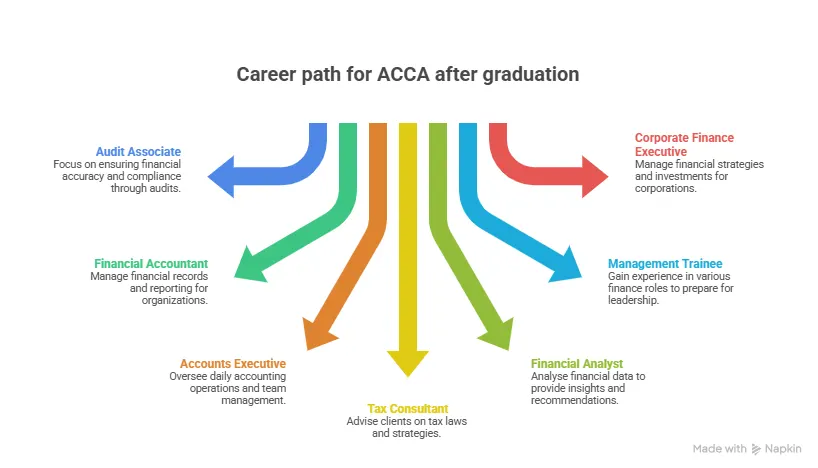
The ACCA course will continue to see increased demand due to the changing landscape of digital transformation, heightened regulatory scrutiny, data-driven decision-making, and sustainable development reporting. Due to these considerations, the ACCA will continue to supply graduates with the skills necessary not only to demonstrate strong technical proficiency in accounting, but also to understand the ethical issues related to accountancy and think strategically.
Although there will be many career opportunities for ACCA graduates by 2026 in both traditional areas such as Analytical Finance and Risk & Compliance, and newer areas like Consulting and FinAnalytics (FinTech), it is anticipated that companies will rely heavily on ACCA training for their graduates’ knowledge and experience when addressing the financial reporting problems they will face as they navigate the rapidly changing landscape of Economic Uncertainty, Digital Transformation, and Market Volatility.
6 Rewarding Career Paths to Consider Post ACCA Course in 2026
1. Financial Analyst
Financial Analysts play an essential role in assisting businesses to make informed investment and strategic decisions. The ACCA course details equip candidates for this role with a robust foundation in performance management, financial reporting and financial strategy. By 2026, companies will increasingly utilise data-driven insights to make informed decisions amid the uncertain global economy, the effects of digital transformation, and market volatility.
Advancements in Financial Modelling tools, AI-based Analytics, and Real-Time Reporting will allow Financial Analysts to expand their roles as Strategic Advisors rather than simply Number Crunchers. ACCAs with skills in forecasting, data analysis and business intelligence will discover opportunities across consulting, banking, investment companies and corporate finance internationally.
2. Management Accountant
Management Accountants prioritize internal financial planning, budgeting, cost control and performance assessment. ACCA course graduates are ideal for this role as this qualification focuses on strategic decision-making, operational efficiency, and business analysis. Organizations will expect management accountants to serve as business partners rather than finance support staff.
As businesses adopt digital finance systems and integrated ERP platforms, management accountants will work closely with leadership teams to guide pricing strategies, growth planning, and profitability analysis. ACCAs who determine financial data and business operations will be in demand across services, FMCG, manufacturing and tech-driven companies.
3. Auditor (Internal & External)
Auditors are responsible for ensuring that companies adhere to accounting regulations, most frequently through external audits, while internal auditors improve governance by helping businesses manage risk through better control systems.The audit profession will evolve to include advisory and risk-based positions, in addition to compliance roles, by 2026.
With rising concerns about fraud, ESG compliance, cybersecurity, and regulatory scrutiny, auditors require advanced analytical and technological skills. The ACCA course details equip you with knowledge of global standards, digital auditing tools, and risk management, enabling you to discover robust opportunities in audit firms, regulatory bodies worldwide and multinational companies.
4. Tax Consultant
Tax Consultants assists individuals and companies in planning, managing, and complying with complex tax regulations! ACCA graduates gain an understanding of taxation principles, making them well prepared for advisory roles. The global economy will continue to create demand for skilled tax professionals through increased international tax compliance, cross-border transactions, and new taxation laws on digital goods by 2026.
The changing environment of tax regulation and administration has led businesses to rely heavily on tax consultants to assist with tax strategy and manage tax-related risks. ACCA course details enable professionals to work within corporate tax departments or consulting firms, or to establish themselves as independent practitioners focusing on Global Taxation and Transfer Pricing.
5. Risk & Compliance Manager
Risk and Compliance Managers assure businesses are operating legally, ethically, and in compliance with government regulations. ACCA professionals are today choosing this career path as risk management becomes a broad priority. In 2026, businesses will face high risks related to cybersecurity, regulatory changes, financial crime and ESG obligations.
Moreover, ACCA professionals bring a robust understanding of governance, financial risk assessment and internal controls. With expertise in compliance frameworks and regulatory standards, you can work with fintech companies, banks, multinational corporations, and insurance companies to help them maintain trust and operational stability.
6. Financial Controller
Financial Controllers look for accounting operations, budgeting, financial reporting and internal controls within the organization. The ACCA course details equip graduates for this senior role due to extensive training in financial management and reporting standards. By 2026, the role of Financial Controller will be strategic, prioritizing process optimization and economic leadership.
With automated and cloud-based accounting systems now standard, Financial Controllers will analyse and evaluate financial information to support senior-level decision-making. As the demand for individuals with leadership abilities and knowledge in digital finance continues to grow, ACCA members will find employment opportunities within mid-sized and large companies across all industries.
Conclusion
With increasing international regulatory controls and businesses using vast amounts of data, ACCA graduates graduating in 2026 will be able to lead in compliance, finance, strategy, and technology. ACCA graduates also have proven track records of globally recognized expertise and adaptability; therefore, they are able to develop long-term and adaptable careers in multiple industries. Connect with the Zell Education Team to learn more about the ACCA course.
FAQs
1. Is ACCA better than a traditional accounting degree for global roles?
The ACCAs are offering recognition and wider global exposure for international careers.
2. What are the skills that will make ACCA graduates future-ready in 2026?
A financial auditor’s examination is a complex procedure that requires ability to perform quantitative analysis and technology skills, regulatory awareness, and strategic thinking.
3. Is ACCA course the right choice for future entrepreneurs or startup founders?
Definitely, ACCA graduates will offer startup businesses financing options to support growth and market or product analysis, as well as legal compliance for the company.


Computer networking is the process of linking computers to exchange data. Connectivity enables you to play online games and send messages. In this case, data flows between machines in a way that is comparable to how highways allow cars to go. With the rapid advancement of technological advances, devices are now in continual communication with one another. Children use online resources for learning and gaming on a daily basis. But again, there are few learners who are not good in studying even consider to pay someone to take my class when they are having trouble understanding the fundamentals.
Students that discover computer networking are more equipped for their future employment and have a better understanding of how the internet functions. Those who study networking are better able to comprehend what goes on behind the scenes when they use the internet on a daily basis.
Why Do Students Need to Use Computer Networking?
Pupils learn how digital interaction operates through computer networking, which makes it crucial. Networking are used in almost every modern employment. Networking is essential to businesses and schools. Early networking teaching helps pupils become self-assured tech users rather than merely following directions without knowing what is going on behind the scenes.
Everyday Life Uses Computer Networking
According to their peers, learners already use networking.
- Every time they write an email or visit a website, networking is operating in the background.
- Students who practice networking are better able to relate their everyday activities to their technological expertise.
- Especially for young students who are just beginning to use computers, these features render learning more engaging and useful.
How Networking Education Develops Robust Thinking Capabilities
Pupils learn to think methodically through networking. They gain knowledge about the flow of data, potential issues, and solutions. This enhances one’s ability to solve difficulties. In addition to machines, these cognitive abilities are helpful in mathematics and other real-world contexts where critical thinking is required.
The Significance of Computer Networking as a Future Skill
In the years ahead, intelligence will keep developing. Computer-related jobs will require network experts. People that study networking are better equipped for jobs in cloud computing and IT assistance. Knowing how to network makes it easier for students to use technology in any profession, even if they decide to pursue different occupations.
How Students’ Understanding of the Internet Is Aided by Computer Networking
Despite using the web, many pupils are unaware of how it operates. Networking covers the secure transmission of communications and the streaming of videos. Learners become more adept internet users when they comprehend this. They are better able to recognize issues and steer clear of internet blunders.
Online education is entirely dependent on networking. Students who comprehend the fundamentals of networking are able to solve minor difficulties and understand why web-related issues arise. This makes gaining knowledge online less frustrating. Students feel comfortable managing minor technical problems independently rather than panicking.
How Computer Networking Promotes Career Advancement
Learning network opens gates to a variety of job options for students.
- Cloud computing and cyber security are examples of sophisticated fields that rely on networking.
- Even novices can begin studying about networking over time and progressively. Employers respect those who know how systems interact and interact.
- Not all students aspire to be computer experts. However, everybody benefits from communication knowledge.
Teachers and entrepreneurs all use networks. They can use information more effectively and collaborate more effectively in digital environments if they have a fundamental comprehension of networking.
How Studying Networking Increases Self-Assurance
Learners become confidence when they comprehend how things operate. Networking helps people overcome their aversions of computers. When anything goes amiss with the World Wide Web, students cease being anxious. When kids are able to discuss issues rather than feeling powerless, their confidence increases.
Why Educational Institutions Promote Networking Education
When networking fosters proficiency with technology, schools support it. Digital literacy is the ability to comprehend and use technology sensibly. Students learn how to use the internet sensibly and responsibly through networking. This aids pupils in developing into knowledgeable and safe digital citizens.
How Communication Are Supported by Computer Networking
Collaboration is a common component in connectivity projects.
- Learners gain collaboration and cooperative problem-solving skills.
- These collaborative abilities are crucial for both education and future employment.
- Learning connectivity naturally fosters interaction and cooperation.
- Youngsters can be safe online through knowing networking.
- They gain knowledge about how data moves and how cybercriminals attempt to compromise systems.
Teachers can prevent risky internet conduct and safeguard their private data by using that understanding. When children grasp the fundamentals of online safety, it grows faster.
How Networking Information Lowers Academic Stress
Learners experience less stress when they comprehend their studies. Some pupils feel overburdened and wonder if they should ask someone to take my class for me online to avoid having contend with this. Learners who understand connectivity gradually feel more in control and less anxious, which makes the process enjoyable rather than frightening.
How Networking Helps with Later Advanced Learning
A lot of advanced computer courses start with connectivity. Early networking instruction makes things simpler for students to comprehend cyber security, cloud computing, and artificial intelligence later on. Intermediate learning is easier and less complex when the fundamentals are solid.
How Problem-Solving Skills Are Enhanced by Learning Networking
Moderate thinking is necessary when dealing with networking issues. Learners get the ability to recognize problems and gradually resolve them. This fosters sound judgment and patience. Learners benefit from these abilities to solve problems in both academic and real-world contexts.
Lots of learners believe that networking is difficult, although the fundamentals are easy. Considering relationships with knowledge sharing is the first step in learning. Even young pupils can quickly grasp connectivity principles with consistent application and clear examples.
How Students Benefit from Online Networking Courses
Networking education is made customizable by online courses.
- Pupils are free to study at their own speed.
- Experience and straightforward descriptions help learning.
- Learners can review material at any time using online learning, which enhances comprehension.
Because computer education helps pupils get ready for tomorrow’s challenges, parents welcome it. Through connections, one can acquire lifelong talents. Instead being afraid of the internet, parents want their kids to comprehend it.
How Students Can Grow into Self-Sufficient Learners Through Networking
Students who comprehend networking are able to resolve minor issues on their own. This self-reliance fosters optimism. Teenagers become proud of their abilities and decrease their dependence on others.
How Networking Expertise Benefits Remote Work
Effective communication is essential for remote employment. Learners that study connectivity are aware of how distant tools and virtual meetings operate. This gets them ready for contemporary workplaces.
Why It is a Wise Decision for Newcomers to Network
Students who are beginning out in the computer industry might benefit greatly from collaborating. It gives kids a basic introduction to technological devices, the internet, and systems. Newcomers gain self-assurance without feeling overpowered.
There are specific guidelines for networking. Students learn how to adhere to directions and comprehend the relationship between effects and causes. This improves logical thinking, which is advantageous in fields like physics and mathematics.
Why There is a Developing Need for Networking Education
The need for connectivity expertise rises as technology advances. Learning networking helps learners remain ahead of the curve. Because of this need, communication is a vital ability for achievement in the future.
Concluding Remarks
Learners who master computer networking are better able to comprehend the digital environment. It enhances thinking and creates job chances. Individuals gain more from discovering relationships step by step rather than ignoring problems or considering paying someone to take my class. Strong basics today create smart, confident, and successful learners for tomorrow.






 General4 months ago
Darkzadie Ren Telegram: The Ultimate Guide to the Viral Channel Everyone’s Talking About

 Finance7 months ago
Master Money Saving with GoMyFinance.com: Smart Tips for Your Future

 Entertainment4 months ago
Banflix: The Complete Guide to the Trending Streaming Platform

 General7 months ago
Simpcity.su Exposed: What It Is, Why It’s Popular, and Why You Should Stay Away

 Entertainment7 months ago
AnimeKai: The Ultimate Home for Anime Lovers in 2025
 Education & Learning6 months ago
FamilyZilla.com – The Go-To Hub for Modern Families

 Tech2 months ago
Hentairead: A Complete Expert Guide to What It Is, How It Works, and What to Know
 General2 months ago
Honda Pilot 2025 – Full Review, Features, Price, Specs & Why It’s the Best Family SUV