Health and fitness
Bain Marie: The Complete Guide to the Gentle Heating Method

Introduction
Cooking is not just about taste—it’s also about technique. Some recipes require high flames and quick cooking, while others demand patience and gentle heat. That’s where the Bain Marie comes in. Known as a water bath or double boiler, this simple yet powerful tool has been used by chefs, bakers, and caterers for centuries. It allows food to be heated gently and evenly, without burning or separating.
From melting chocolate to preparing delicate sauces or keeping food warm at a buffet, the Bain Marie is an essential tool in both professional kitchens and home cooking. In this article, we’ll explore everything you need to know about the Bain Marie—its history, uses, types, benefits, safety tips, and how it can improve your cooking game. By the end, you’ll understand why it’s called the chef’s secret weapon for perfect results.
What is a Bain Marie?
A Bain Marie is a cooking method where a container of food is placed inside another container filled with hot water. The water surrounds the food container and gently heats it. This indirect heating method prevents food from burning, curdling, or overcooking.
The term comes from French and literally means “Mary’s Bath.” Historians believe it was named after an ancient alchemist, Maria the Jewess, who used a similar technique for heating substances slowly and evenly.
How Does a Bain Marie Work?
The science behind a Bain Marie is simple:
- Water heats up to 100°C (212°F) and doesn’t go higher under normal conditions.
- This prevents food from being exposed to extremely high direct heat.
- As a result, delicate dishes like custards, sauces, and chocolate are cooked evenly and safely.
Common Uses of a Bain Marie
1. Melting Chocolate 🍫
Chocolate burns easily on direct heat. A Bain Marie ensures smooth, glossy, lump-free melted chocolate.
2. Making Sauces 🥘
Delicate sauces like hollandaise, cheese sauce, or béarnaise require gentle heating to avoid curdling.
3. Custards & Desserts 🍮
Desserts like crème brûlée, cheesecakes, and puddings are baked in a water bath to prevent cracks and dryness.
4. Keeping Food Warm in Catering 🍲
Restaurants and buffets use electric Bain Maries to keep food at safe serving temperatures without drying it out.
5. Scientific and Medical Use 🧪
Outside kitchens, Bain Maries are also used in laboratories for controlled heating of liquids and samples.
Types of Bain Maries
1. Stovetop Bain Marie (Double Boiler)
- A bowl or pan placed over a pot of simmering water.
- Common in home kitchens for baking and melting.
2. Oven Bain Marie (Water Bath Baking)
- Baking dish placed inside a tray filled with hot water.
- Used for cheesecakes, custards, and puddings.
3. Electric Bain Marie
- Common in restaurants and buffets.
- Stainless steel trays keep soups, curries, pasta, or rice warm.
4. Laboratory Bain Marie
- Specialized heated water containers used for scientific experiments.

Features of a Bain Marie
When choosing or using a Bain Marie, consider these features:
- Material: Stainless steel, ceramic, or glass.
- Heating Source: Stovetop, oven, or electric.
- Temperature Control: Some models offer adjustable settings.
- Size: From small home versions to large catering units.
- Lids & Covers: Helps retain moisture and heat.
Benefits of Using a Bain Marie
✅ Gentle and Even Cooking
Prevents food from overheating, burning, or sticking.
✅ Perfect for Delicate Dishes
Chocolate, sauces, and custards come out smooth and flawless.
✅ Keeps Food Warm for Hours
Ideal for restaurants, buffets, and events.
✅ Multi-Purpose
Useful in both kitchens and labs.
Pros and Cons of a Bain Marie
Pros
- Easy to use
- Prevents burning
- Maintains food quality
- Essential for baking delicate desserts
Cons
- Slower cooking method
- Requires extra utensils
- Electric versions can be expensive
How to Use a Bain Marie (Step by Step)
For Melting Chocolate or Sauces
- Fill a saucepan halfway with water.
- Place a heatproof bowl on top, ensuring it doesn’t touch the water.
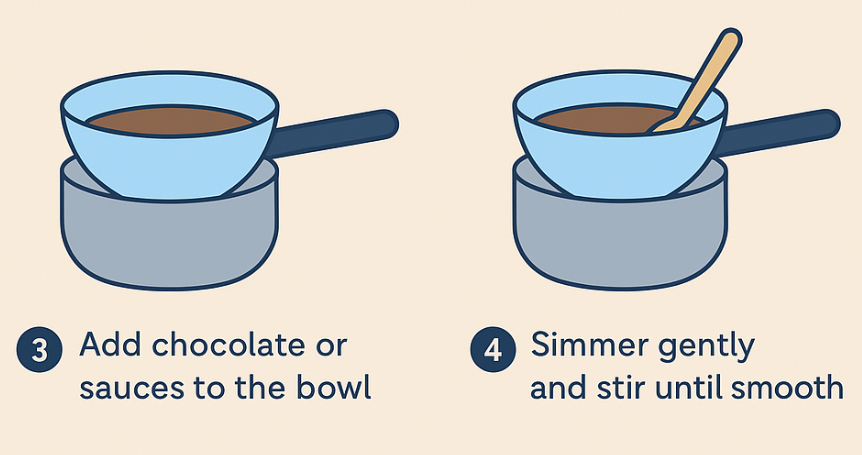
- Add chocolate or sauce to the bowl.
- Simmer gently and stir until smooth.
For Baking Custards or Cheesecake
- Place your baking dish in a larger roasting pan.
- Pour hot water into the pan until it reaches halfway up the sides of the dish.
- Bake slowly for even cooking.
For Catering (Electric Bain Marie)
- Fill the bottom tray with hot water.
- Place food trays above.
- Switch on heating for continuous warmth.
Safety Tips for Using a Bain Marie
- Don’t overfill with water—it may spill into the food.
- Use oven mitts when handling hot containers.
- Keep electric Bain Maries dry to avoid hazards.
- Stir occasionally to prevent lumps in sauces or chocolate.
Bain Marie in Professional Kitchens
In professional kitchens, Bain Maries are used daily. Chefs rely on them to:
- Melt butter and chocolate
- Prepare custards in bulk
- Keep gravies, soups, and curries hot for service
- Hold side dishes like rice and pasta at perfect serving temperature
They’re an essential part of any catering setup.
Bain Marie vs Double Boiler: What’s the Difference?
Many people confuse them.
- Bain Marie: General method using hot water, can be stovetop, oven, or electric.
- Double Boiler: Specifically two pots stacked (one with water, one with food).
So, a double boiler is a type of Bain Marie.
Buying Guide: Choosing the Best Bain Marie
When buying one, look for:
- Purpose: Home (baking, melting) or commercial (buffet, catering).
- Size: Small bowls vs large food trays.
- Material: Stainless steel for catering, ceramic/glass for baking.
- Budget: Manual Bain Maries are cheaper; electric ones cost more.
FAQs About Bain Marie
Q1. What is the main purpose of a Bain Marie?
To provide gentle and even heating for delicate foods without burning.
Q2. Is Bain Marie the same as a double boiler?
Yes, but a double boiler is a type of Bain Marie used on stovetops.
Q3. Can I bake cheesecake without a Bain Marie?
Yes, but it may crack. A water bath ensures smooth, creamy texture.
Q4. What temperature should a Bain Marie be kept at?
Around 60–70°C (140–158°F) to keep food warm without overcooking.
Q5. Is Bain Marie only for professional chefs?
No, it’s also useful for home bakers, caterers, and even laboratories.
Conclusion
A Bain Marie may look like a simple cooking method, but it’s a powerful tool in both home kitchens and professional catering. From melting chocolate and preparing sauces to baking cheesecakes and keeping food warm, it ensures gentle, even heating that protects food from burning or drying out.
If you’re a food lover, baker, or chef, investing in a Bain Marie can completely change your cooking game. It not only improves food quality but also saves time and stress. Whether you’re working at home or running a restaurant, the Bain Marie is truly a must-have secret tool for perfect cooking results.